Bulgaria 2025 Lessons Identified Conference: Turning Experience into Readiness
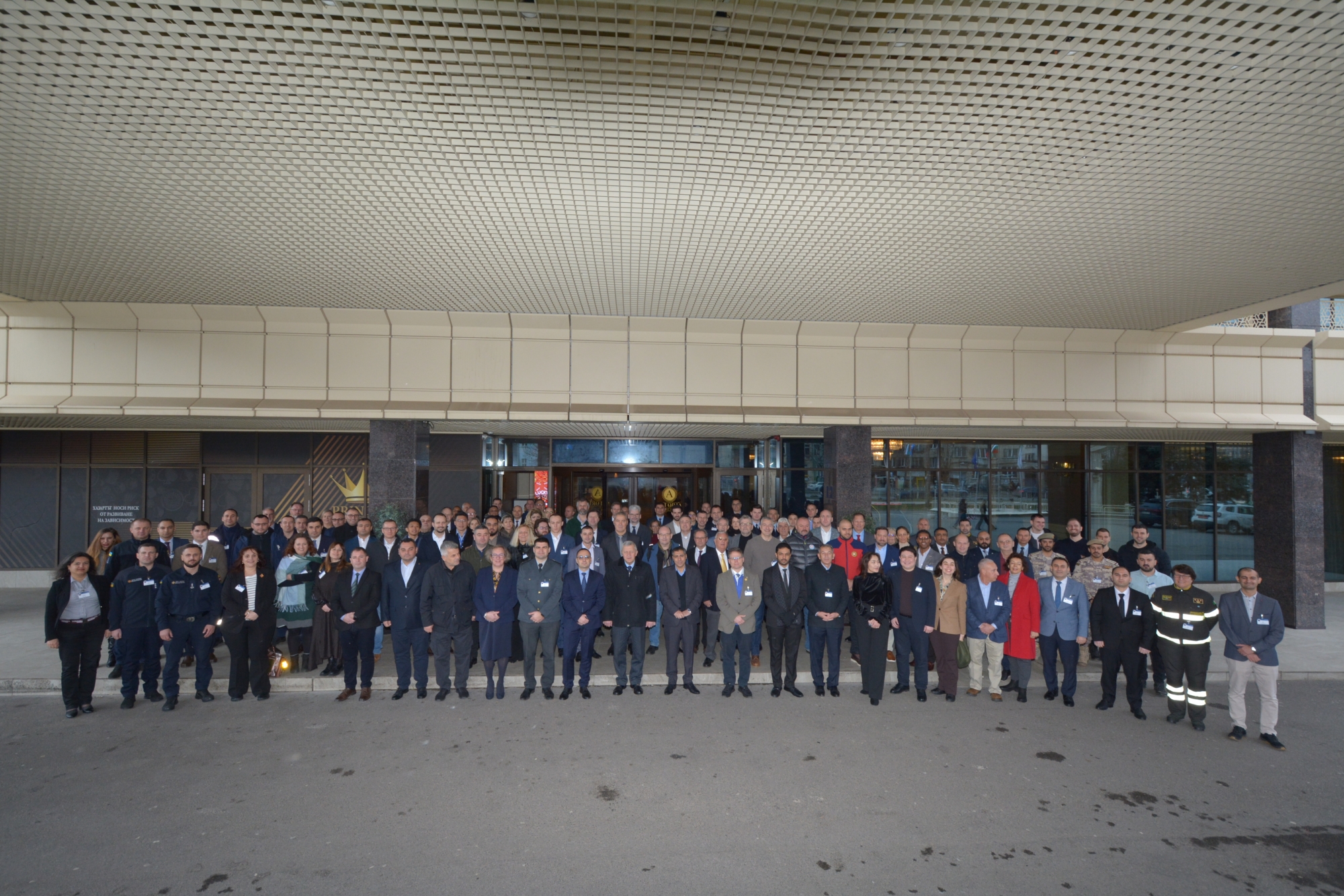
Date: (12-02-2026)
This conference was important because it moved the community from activity to improvement: from what happened in the field to what must change in procedures, coordination, and capabilities – so that the next real emergency finds us faster, sharper, and more interoperable.
A learning event built on a large, complex NATO exercise
BULGARIA 2025 was designed as a high-complexity, civilian-led emergency management exercise – one that trained a wide range of response disciplines while testing the seams between national systems and international support mechanisms. EADRCC exercises are among the world’s largest multinational emergency management activities, and BULGARIA 2025 specifically focused on strengthening resilience, preparedness, and civil-military cooperation.
Sofia as the “bridge” between field performance and strategic improvement
The Lessons Identified Conference held in Sofia captured operational realities and translated them into structured, shareable lessons.
The conference was also a planned milestone within the overall exercise cycle – explicitly included in NATO and exercise documentation as the mechanism to evaluate outcomes and determine next steps.
What we did: structured reflection across the full response spectrum
The conference design followed a practical rhythm to improve future planning processes.
After establishing a common baseline for discussion on Day 1, various working groups addressed the complexity of reality – from the planning phase, through logistics, operational elements, and multi-cell coordination structures, to cross-cutting topics. There was also a dedicated session on research, reinforcing that modern preparedness depends on evidence, data, and learning systems – not only tactics and hardware.
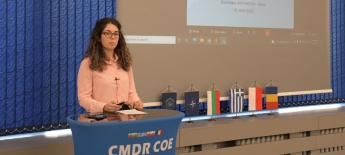
In his closing remarks, the CMDR COE Director, COL Orlin NIKOLOV, summarised the conference in the spirit in which it was conducted: “to turn experience into improvement.” He emphasised that the diversity of operational services, ministries, militaries, international organisations, and research communities was not decorative but essential to transforming complex experience into practical change.
He highlighted three key directions that emerged across the sessions:
Coordination structures matter most under pressure
“In a fast-moving, multi-actor response, clarity of roles, decision rhythms, and information flows can be as life-saving as any tool.”
Host Nation Support and cross-border facilitation are decisive enablers
“These are not merely ‘administrative’ issues; they are operational factors that determine how quickly teams arrive, how long they remain effective, and how safely they operate.”
Resilience and the information environment are inseparable from response
“Public communication, trust, and the ability to withstand malign narratives are integral to crisis management, not an add-on.”
Most importantly, COL Nikolov set a standard for what “success” actually means after a conference:
“Lessons that remain in conference notes do not improve readiness.”
He provided a concrete translation pathway, one that the community can align around immediately:
• Actionable recommendations, prioritised by impact and feasibility;
• Owners and timelines, so lessons become tasks;
• Sharing mechanisms, so improvements scale across Allies and partners.
CMDR COE’s role was stated plainly and practically: to support partners and stakeholders in converting insight into capability, and to remind that real success will be demonstrated in the face of the next crisis, when we will be prepared to act quickly, coordinate more effectively, and communicate more clearly.
The CMDR COE Director also expressed his sincere appreciation to everyone who planned, delivered, evaluated, and supported both the exercise and the conference, especially the EADRCC and the Fire Safety and Civil Protection Directorate. That recognition is well deserved – this was a major multinational endeavour, and Bulgaria’s role as host enabled a demanding training environment and an equally professional space for honest reflection afterwards.
A Lessons Identified Conference is not the finish line – it is the handover point between learning and implementation. Resilience is not built during the crisis – it is built together, before it.
News
 NATO Partnerships 360 Symposium
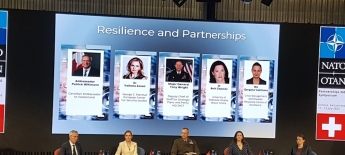
CMDR COE Panelist to the NATO Partnerships 360 Symposium.
» read more
 New life for used plastic – the CMDR COE launches a recycling initiative
The CMDR COE new approach to reducing plastic pollution.
» read more
 Representatives from UK and US Embassies paid a visit to CMDR COE
The CMDR COE is proud to announce that on 31st of May 2022 a meeting with representatives from The United Kingdom Embassy to Bulgaria and the United States Embassy to Bulgaria was held.
» read more Visit of the Chief of Defence of the Republic of Turkey
On 31st of May, 2022, General Yaşar Güler, Commander of the Turkish Armed Forces paid an official visit to CMDR COE.
» read more

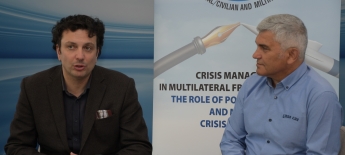 Role of Crisis Diplomacy
Together with Bulgarian Diplomatic Institute (BDI) online iteration of the Crisis Management in Multilateral Frameworks (IGOs): The Role of Political/Civilian and Military Crisis Diplomacy Course
» read more
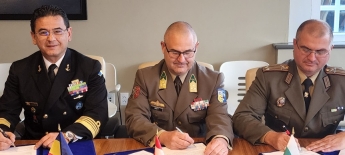 Signed Note of Joining of Hungary to CMDR COE
We are proud to announce that a Note of Joining of Hungary to CMDR OOE was signed at the Headquarters of the Allied Command of Transformation.
» read more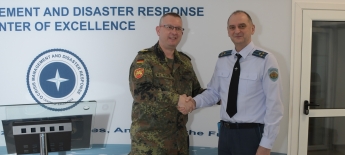 Visit of the JFCNP ACOS J9
Brigadier General Marcus Ellermann paid a visit to the CMDR COE
» read more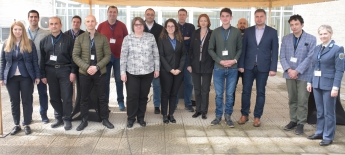 Successful hybrid iteration of the Climate Change and Security Course
Another successful iteration of the Climate Change and Security course took place from 05 to 08 April 2022 on the CMDR COE premises in Sofia, and online.
» read more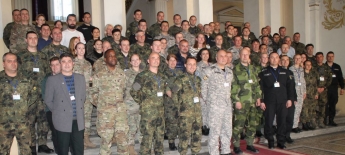
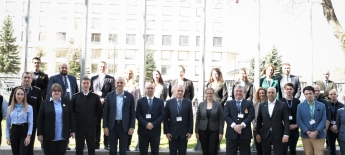 Climate Change and Security Course started
Today, 5th April, the Climate Change and Security Course began. The course is conducted under the auspicious of the European Security and Defence College (ESDC), with the support of the Diplomatic Institute to the Minister of Foreign Affairs of the Republic of Bulgaria.
» read more CMDR COE celebrated its 7th Anniversary
On 31 March 2022, CMDR COE celebrated its 7th Anniversary
» read more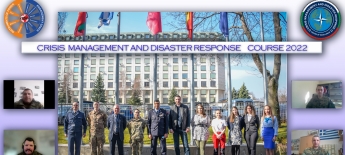 Crisis Management and Disaster Response Course successfully completed
The hyrbid (residential and on-line) edition of the Crisis Management and Disaster Response Course was conducted in the period 21-25 Mar 2022 from the virtual studio of CMDR COE.
» read more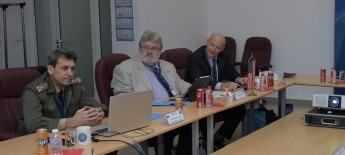 Cooperation with Department of Energy, USA
Productive working meeting with representatives from the Department of Energy (US DOE)
» read more
 Online using JADL platform
Conducting Disaster Management Course via Joint Advanced Distributed Learning (JADL)
» read more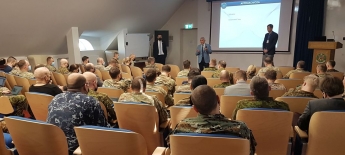
 First GFP course iteration in 2022 completed
 Congratulations to the freshly certified GFPs!
» read more Commence the 2022 CMDR COE Internship
CMDR COE welcomes interns for its Spring intake of the 2022 Internship Programme
» read more