
CMDR COE Cognitive Warfare Course – Another Tool to Support NATO Deterrence and Defence
Date: (20-06-2026)
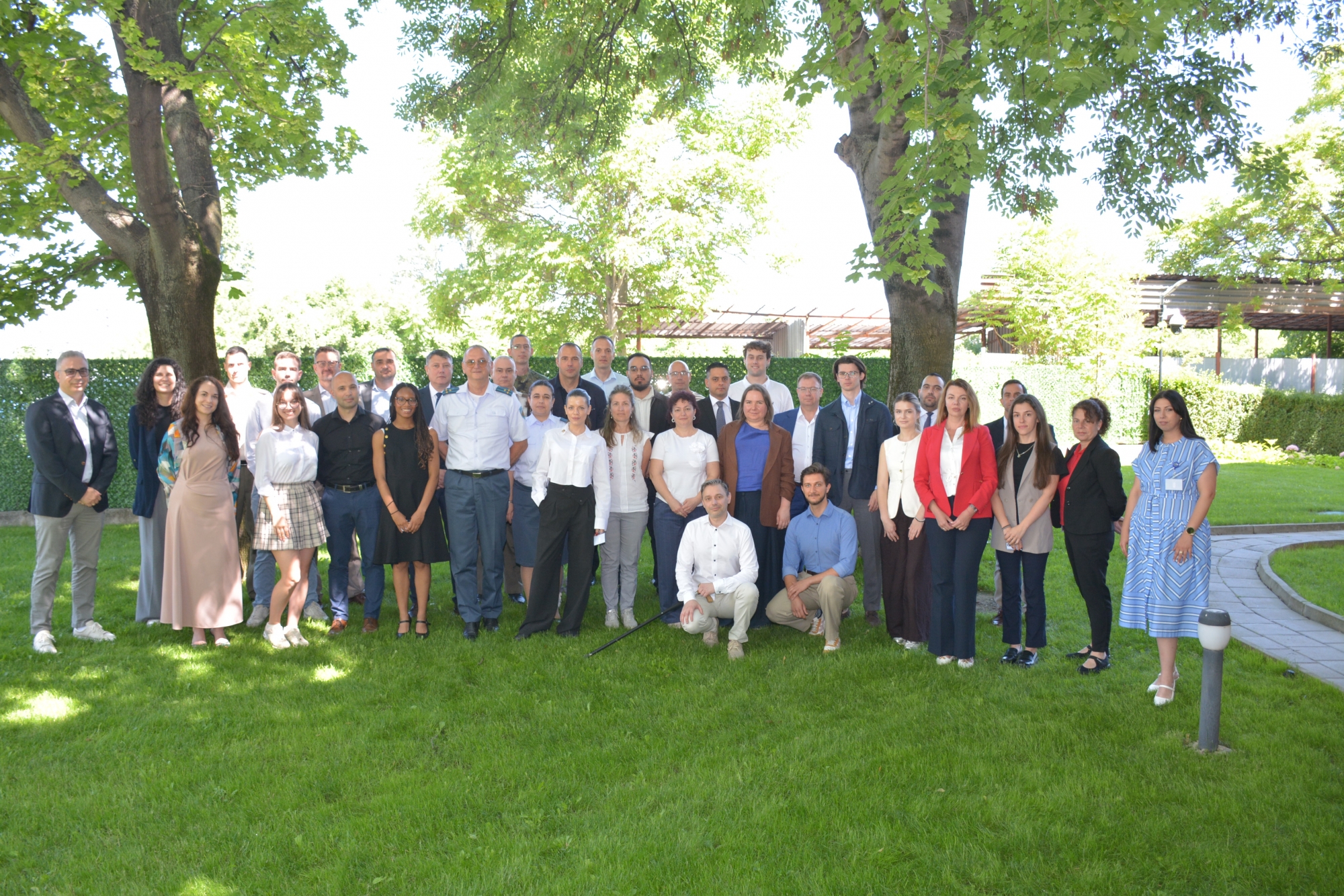
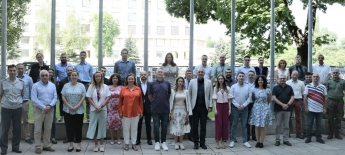
The Crisis Management and Disaster Response Centre of Excellence successfully conducted the 2026 iteration of its Cognitive Warfare Course from 15 to 19 June 2026 in Sofia, Bulgaria.
The course brought together over 25 military and civilian participants from five countries, representing a wide range of positions within NATO and national defence and security organisations, as well as academia, public institutions, and non-governmental organisations.
This year’s course was delivered in the context of NATO’s evolving approach to cognitive warfare and its direct relevance to Multi-Domain Operations (MDO) and the Deterrence and Defence of the Euro-Atlantic Area (DDA). As NATO continues to strengthen its ability to operate across all domains and environments, the cognitive dimension is increasingly important for maintaining decision advantage, protecting cohesion, strengthening resilience, and enabling effective action in peace, crisis, and conflict.
The course aimed to expand understanding of the cognitive dimension and its implications for security, defence, and society. It explored a wide range of topics, from the neurobiology and psychophysiology of human behaviour to the characteristics of the information environment, adversarial strategies for exploiting vulnerabilities, and approaches democratic societies can adopt to strengthen resilience.
Opening the course, the CMDR COE Director, Colonel Orlin NIKOLOV, emphasised that cognitive warfare is not simply another form of disinformation, nor solely a communication, cyber or technological problem. It is a security challenge that targets how individuals, groups, institutions and societies perceive reality, interpret events, build trust, make decisions and act. In this sense, the cognitive dimension directly affects NATO’s ability to deter, defend, operate and make decisions under pressure.
Over five intensive days, participants examined the neurological and psychological architecture of human cognition, cognitive biases and heuristics, identity, perception, meaning-making, social systems, cultural frameworks and group dynamics. The course also addressed the historical evolution of cognitive and information confrontation, as well as Russian, Iranian and Chinese approaches to strategic influence and cognitive operations.
A key focus was the practical contribution to the cognitive aspect of resilience. Participants discussed the cyber dimension of cognitive warfare, communication strategies for pre-bunking and inoculation, NATO’s approach to cognitive warfare, AI-driven transformation in the information space, OSINT and analytical approaches to tracking influence operations, and frameworks for countering AI-enabled cognitive operations.
The practical component of the course included syndicate work, group deliberations, national coordination discussions, and a capstone exercise focused on recommendations for a national cognitive resilience framework. These activities enabled participants to translate theory into practical approaches that support planning, training, decision-making, interagency coordination, and civil-military cooperation.
Throughout the course, one message remained clear: technology accelerates cognitive operations, but the human being remains central. Perception, trust, attention, judgement, identity, and cohesion are decisive factors for operational effectiveness, societal resilience, and Allied unity.
By bringing together military and civilian practitioners, researchers, public institutions, and civil society representatives, the course reaffirmed the unique value of CMDR COE as a platform where knowledge, operational experience, and cross-sector cooperation are transformed into preparedness. In doing so, the Centre contributes to NATO’s broader efforts to strengthen cognitive resilience, support multi-domain thinking, and reinforce deterrence and defence.
CMDR COE thanks all lecturers, instructors, facilitators, and participants for their valuable contributions to the successful delivery of the Cognitive Warfare Course 2026.
News
 Official Appointment of CMDR COE
 Department Head for the NATO Business Continuity Management
» read more CMDR COE in the Industrial Day at Tech Park
Participation in a high-level conference at Tech Park Sofia
» read more Broader Initiative to Fortify Resilience
Resilience workshop focused on Public Private Partnership
» read more Navigating Resilience: A Journey through CMDR COE Internship with Ms. Tsveti Monova
Exploring the Interplay of Strategic Communications and Resilience in the Military Context
» read more Strategic Collaboration and Future Synergies: A Diplomatic Dialogue at CMDR COE
Exploring Partnerships for Crisis Management and Disaster Response between Denmark and the Republic of Bulgaria.
» read more
 Participation in I/ITSEC 2023
CMDR COE delivered an article on the subject “Refugee Flow Management and Resilience Implications”
» read more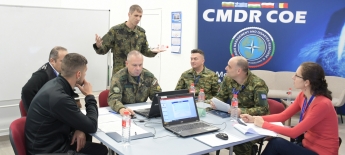 Professionals Conclude Intensive Course on Strategic Decision-Making for Crisis Response Operations
Empowering Leaders with Critical Skills in Crisis Management
» read more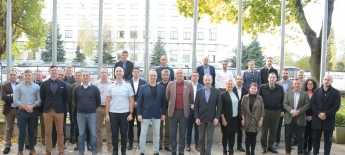

 Kick-off meeting for MSG-221 Project
MSG – 221: M&S in Support of Building Resilience and Management of People Mass Movement
» read more Annual CMDR COE Academic Advisory Board and Steering Committee meetings
From 24 to 26 October 2023 in Sofia, Bulgaria was conducted the 4th CMDR COE AAB and the 11th CMDR COE SC meetings.
» read more
 That’s a wrap for 2023!
Successful completion of the NATO-approved Gender Focal Point Course online iteration
» read more Solidifying partnership
 The CMDR COE Director and the NCGM Commandant reaffirm commitment to cooperation
» read more Expert Workshop on Gender Perspectives
The CMDR COE successfully concluded an Expert Workshop on Gender Perspectives
» read more
 CMDR COE Extends Crucial Assistance to Jordan′s National Exercise
CMDR COE Collaborates with Jordan in Evaluating Earthquake Preparedness.
» read more Multinational Crisis Management Course
A course for the Jordanian Public Security Directorate
» read more Collaboration with an university
Agreement with the University of National and World Economy (UNWE).
» read more

 Disaster Risk Management Course for the Jordanian Public Security Directorate
11-16 June 2023
» read more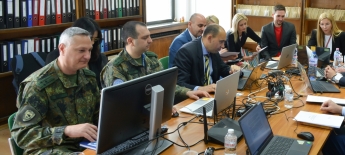 Practice of crisis management procedures
A training session took place on June 7, 2023, at the Bulgarian Ministry of Foreign Affairs...
» read more

